

You've switched to a sulfate-free shampoo. You're using the right treatments. Your scalp care routine is dialed in. And yet your scalp still feels tight, itchy or flaky. The culprit might not be what you're putting on your scalp, but what's coming out of your shower.
Hard water affects over 60% of homes across the UK and Ireland and it's one of the most overlooked factors in chronic scalp problems. Many people treat symptoms for years without realizing their water is quietly sabotaging every product they use.
What Makes Water "Hard" (And Why Your Scalp Cares)
Hard water isn't contaminated or unsafe. It simply contains high concentrations of dissolved minerals — primarily calcium and magnesium — picked up as water moves through limestone and chalk deposits underground.
When hard water hits your scalp, those minerals don't rinse away. They bind to your hair and skin, forming a thin, invisible film. Over time, this mineral buildup:
• Disrupts your scalp's natural pH (skin should be mildly acidic; hard water is alkaline)
• Blocks conditioning ingredients from absorbing
• Traps product residue against the scalp
• Creates a breeding ground for irritation and fungal overgrowth
The result? Your scalp is constantly fighting a battle it can't win.

![]() The Hard Water Chain Reaction
The Hard Water Chain Reaction
Here's what happens microscopically:
pH disruption: Healthy scalp sits at pH 4.5-5.5 (mildly acidic). Hard water measures pH 8-8.5 (alkaline). Every wash shifts your scalp's pH, weakening the barrier and allowing irritation-causing microbes to multiply.
Mineral film formation: Calcium and magnesium don't dissolve in your scalp's natural oils. Instead, they form soap scum — the same crusty residue on your shower door. On your scalp, this invisible film blocks any treatment you apply. Your serum can't penetrate. Your scalp can't breathe.
Product buildup: Shampoos react with hard water minerals to form insoluble compounds that cement to your scalp. What should rinse clean stays stuck. Week after week, the buildup thickens.
Inflammation: A scalp covered in mineral deposits becomes inflamed. Itching starts. Scratching damages the barrier further. Malassezia (the yeast behind seborrheic dermatitis and dandruff) thrives in this disrupted environment.
This is why two people using the exact same products get wildly different results. One has soft water. The other doesn't.

How to Tell If Hard Water Is Your Problem
The Soap Test (2 minutes)
Fill a clear bottle halfway with tap water. Add 10 drops of liquid soap. Shake for 10 seconds.
Soft water: Thick, lasting suds. Clear water.
Hard water: Few bubbles that vanish quickly. Cloudy, milky water.
That cloudiness is soap reacting with minerals — the same reaction happening on your scalp.

The Kettle Test
If you regularly boil tap water in a kettle, check inside after a few weeks. White, chalky buildup? That's calcium carbonate. It's also coating your scalp.

The Scalp Symptom Pattern
Hard water issues have a specific signature. Three or more of these? Hard water is likely involved:
• Your scalp feels worse after washing, not before
• Products that worked elsewhere stop working when you move
• Hair feels coated or heavy even after shampooing
• Flakes or itching appear within 24 hours of washing
• Traveling temporarily improves your scalp

What Hard Water Mimics
Hard water damage often looks like other conditions:
Looks like seborrheic dermatitis: Flaking, redness, itching — but antifungal shampoos barely help because minerals keep feeding the problem.
Looks like dry scalp: Tight, flaky, uncomfortable, but adding moisture doesn't work because the mineral film blocks hydration.
Looks like product sensitivity: Itching after new products, but it's not the product, it's how it reacts with your water's minerals.
The aha moment: You might not have the scalp condition you think you have. You might just have hard water.

The Solutions (Ranked by Impact)
1. Install a Shower Filter (Highest Impact)
A quality shower filter removes calcium, magnesium, chlorine and heavy metals before water touches your scalp.
What to look for:
• Multi-stage filters addressing minerals (not just chlorine)
• KDF filtration or Vitamin C filters
• Filters specifically rated for hard water
Cost: €25-80. Replacement cartridges every 6-12 months (€10-20).
Results: Softer hair within 1-2 washes. Scalp improvement (less itching, fewer flakes) within 1-2 weeks.
This is the single most effective solution for moderate to severe hard water.

2. Use a Chelating Shampoo (Weekly Reset)
Chelating shampoos contain ingredients (EDTA or citric acid) that bind to mineral deposits and lift them away.
How to use: Once weekly, replace regular shampoo with a chelating formula. Massage into scalp for 2-3 minutes, rinse thoroughly, then follow with a hydrating treatment.
Best for: Renters who can't install filters or as a complement to filtered water.
Note: Can be stripping — use once weekly maximum.

3. Apple Cider Vinegar Rinse (pH Rebalance)
ACV (pH ~3) counteracts hard water's alkaline effect and dissolves light mineral buildup.
How to use: Mix 1-2 tablespoons raw apple cider vinegar in 1 cup water. After shampooing, pour over scalp, massage briefly, let sit 1-2 minutes, rinse thoroughly.
Frequency: 1-2 times weekly.
Limitation: Maintenance strategy, not a fix. Helps manage buildup but won't eliminate it in very hard water.

4. Switch to pH-Balanced Cleansers
Traditional sulfate shampoos react badly with hard water, creating more residue. Low-lather, acidic formulas (pH 4.5-5.5) are less reactive and reduce buildup.

5. Increase Rinse Time
Hard water means products don't rinse easily. Most people rinse for 10-15 seconds. Try 45-60 seconds of thorough rinsing while massaging the scalp to dislodge deposits.
What Not to Do
- Don't assume your scalp is "just sensitive" — sensitivity is often a symptom. If hard water is the trigger, treating sensitivity alone won't solve it.
- Don't pile on more products. If minerals are blocking absorption, more product makes it worse. Clear the buildup first, then rebuild your routine.
- Don't ignore location patterns. If your scalp improves when traveling, that's your water talking.
- Rebuilding Your Scalp After Hard Water Damage
Once you've addressed the water, your scalp needs 4-6 weeks to repair:
Weeks 1-2: Use chelating shampoo to clear existing mineral deposits. Your scalp might feel strange (very clean or slightly stripped) — that's normal.
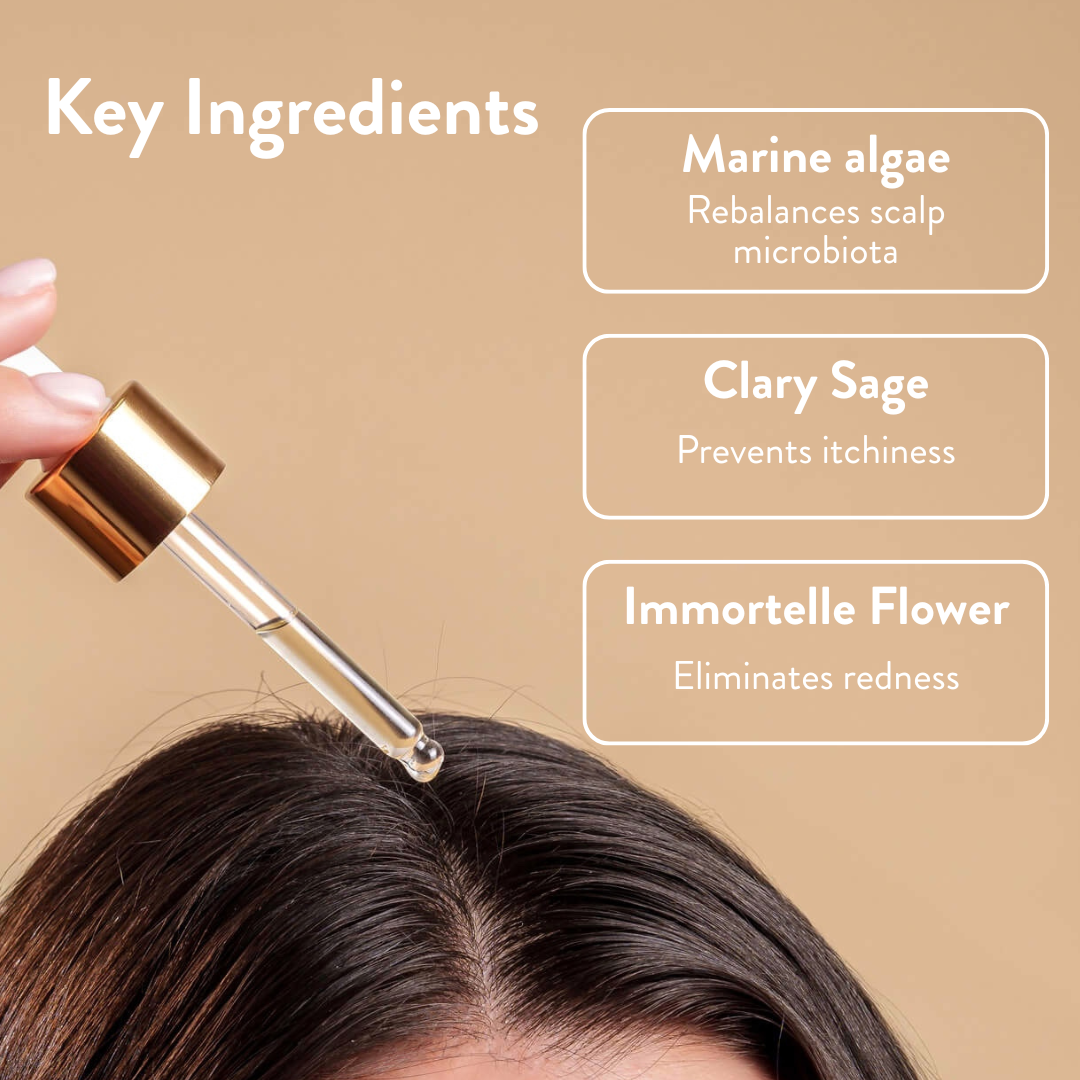
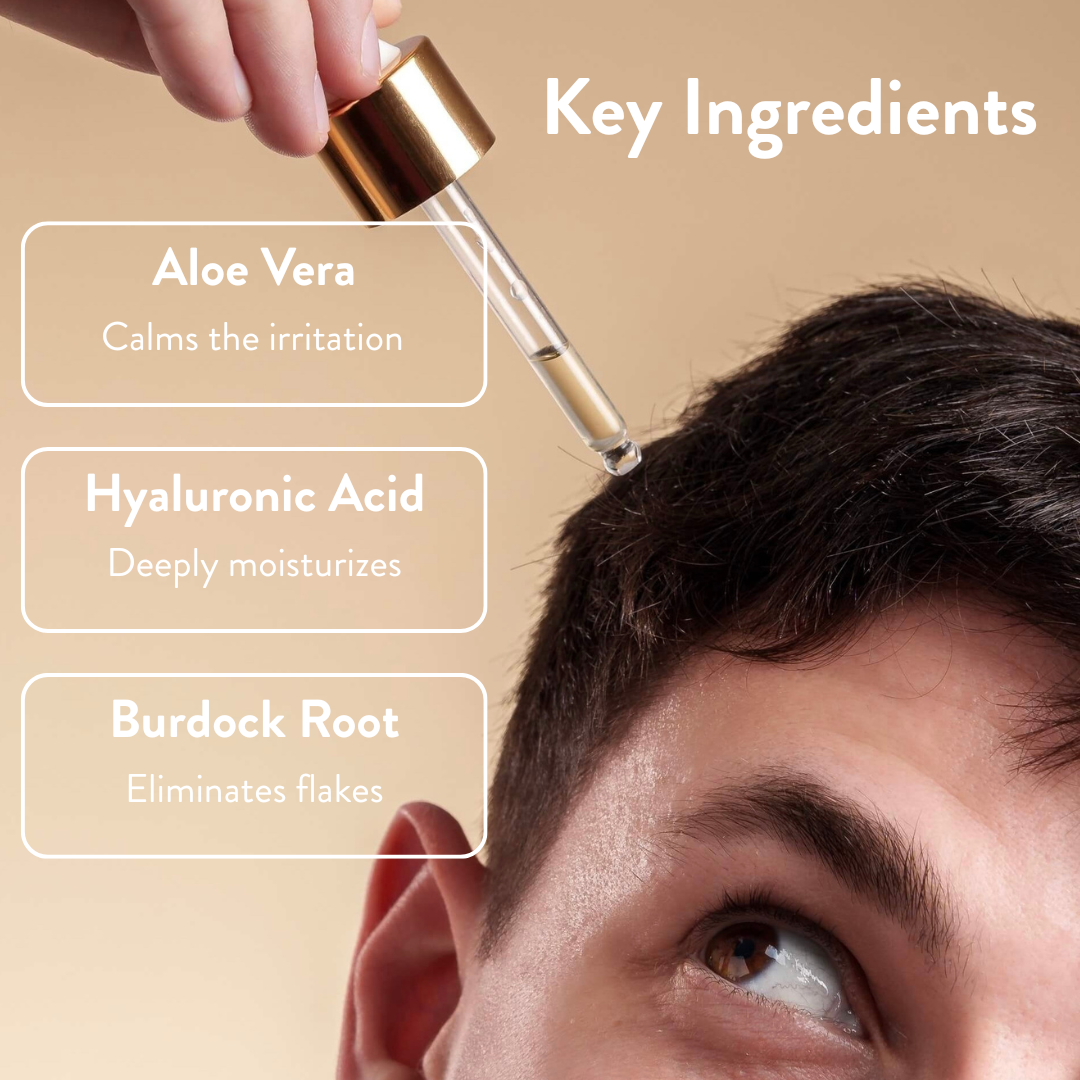
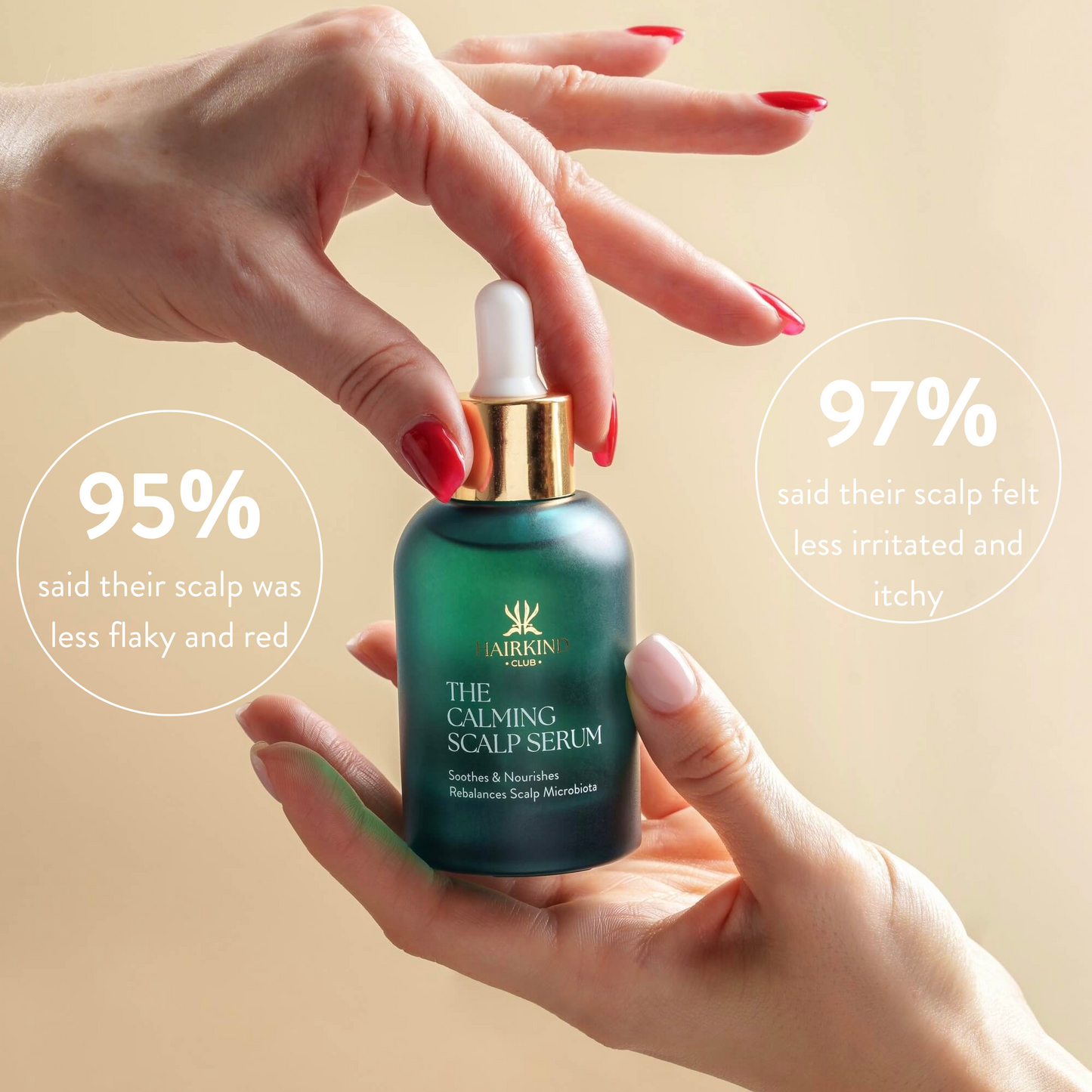
Weeks 2-4: Focus on barrier repair. Look for prebiotics (microbiome balance), panthenol and glycerin (moisture), aloe vera (soothing), and niacinamide (barrier strengthening). A prebiotic-rich scalp serum helps reset both barrier and microbiome.

Week 4+: Maintain with filtered water and weekly chelating treatments as needed. Your scalp should feel calmer and less reactive.
The Bottom Line
Hard water is invisible, but its effects aren't. If you've been treating scalp symptoms without addressing your water, you're filling a bucket with a hole in it.
The good news: This is fixable. A shower filter costs less than two months of specialty shampoos. The results — softer hair, calmer scalp, products that finally work show up within weeks.
Your scalp isn't broken. It's been fighting an uphill battle. Change the water and you change the game.